Summary of Significant Accounting Policies |
6 Months Ended | |||||||||||||||||||||||||||||||||||||||||||||||||||||||||||||||||||||||||||||||||||||||||||||||||||||||||||||||||||||||||||||||||||||||||||||||||||||||||||||||||||||||||||
|---|---|---|---|---|---|---|---|---|---|---|---|---|---|---|---|---|---|---|---|---|---|---|---|---|---|---|---|---|---|---|---|---|---|---|---|---|---|---|---|---|---|---|---|---|---|---|---|---|---|---|---|---|---|---|---|---|---|---|---|---|---|---|---|---|---|---|---|---|---|---|---|---|---|---|---|---|---|---|---|---|---|---|---|---|---|---|---|---|---|---|---|---|---|---|---|---|---|---|---|---|---|---|---|---|---|---|---|---|---|---|---|---|---|---|---|---|---|---|---|---|---|---|---|---|---|---|---|---|---|---|---|---|---|---|---|---|---|---|---|---|---|---|---|---|---|---|---|---|---|---|---|---|---|---|---|---|---|---|---|---|---|---|---|---|---|---|---|---|---|---|---|---|
Dec. 31, 2019 | ||||||||||||||||||||||||||||||||||||||||||||||||||||||||||||||||||||||||||||||||||||||||||||||||||||||||||||||||||||||||||||||||||||||||||||||||||||||||||||||||||||||||||||
| Summary of Significant Accounting Policies | ||||||||||||||||||||||||||||||||||||||||||||||||||||||||||||||||||||||||||||||||||||||||||||||||||||||||||||||||||||||||||||||||||||||||||||||||||||||||||||||||||||||||||||
| Summary of Significant Accounting Policies | Note 2. Summary of Significant Accounting Policies Use of Estimates The preparation of financial statements in conformity with GAAP requires management to make estimates and assumptions that affect the reported amounts of assets and liabilities and disclosures of contingent assets and liabilities at the date of the financial statements and the reported amounts of revenue and expenses during the reporting periods. Actual results could differ from these estimates. These estimates and assumptions include estimates for reserves of uncollectible accounts, accruals for potential liabilities, assumptions made in valuing equity instruments issued for services or acquisitions, and realization of deferred tax assets. Concentration of Credit Risk Financial instruments, which potentially subject the Company to concentrations of credit risk, consist of cash and cash equivalents and accounts receivable. The Company places its cash with high quality financial institutions and at times may exceed the FDIC $250,000 insurance limit. The Company does not anticipate incurring any losses related to these credit risks. The Company extends credit based on an evaluation of the customer’s financial condition, generally without collateral. Exposure to losses on receivables is principally dependent on each customer’s financial condition. The Company monitors its exposure for credit losses and intends to maintain allowances for anticipated losses, as required. Cash denominated in Euros with a US Dollar equivalent of $66,307 and $63,933 at December 31, 2019 and June 30, 2019, respectively, was held by Reprints Desk in accounts at financial institutions located in Europe. The Company has no customers that represent 10% of revenue or more for the three and six months ended December 31, 2019 and 2018. The Company has no customers that accounted for greater than 10% of accounts receivable at December 31, 2019 and June 30, 2019.
The following table summarizes vendor concentrations:
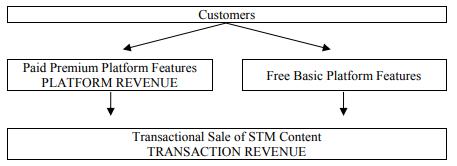
* Less than 10% Revenue Recognition In May 2014, the Financial Accounting Standards Board (“FASB”) issued ASU 2014‑09, Revenue from Contracts with Customers (Topic 606), ("ASC 606"). The underlying principle of ASC 606 is to recognize revenue to depict the transfer of goods or services to customers at the amount expected to be collected. The Company adopted the guidance of ASC 606 on July 1, 2018. The implementation of ASC 606 had no impact on the condensed consolidated financial statements and no cumulative effect adjustment was recognized. Revenues are recognized when control of the promised goods or services are transferred to a customer, in an amount that reflects the consideration that the Company expects to receive in exchange for those goods or services. The Company derives its revenues from two sources: annual licenses that allow customers to access and utilize certain premium features of our cloud based SaaS research intelligence platform (“Platforms”) and the transactional sale of STM content managed, sourced and delivered through the Platform (“Transactions”).
The Company applies the following five steps in order to determine the appropriate amount of revenue to be recognized as it fulfills its obligations under each of its agreements:
Platforms We charge a subscription fee that allows customers to access and utilize certain premium features of our Platform. Revenue is recognized ratably over the term of the subscription agreement, which is typically one year, provided all other revenue recognition criteria have been met. Billings or payments received in advance of revenue recognition are recorded as deferred revenue. Transactions We charge a transactional service fee for the electronic delivery of single articles, and a corresponding copyright fee for the permitted use of the content. We recognize revenue from single article delivery services upon delivery to the customer provided all other revenue recognition criteria have been met. Deferred Revenue Customer deposits and billings or payments received in advance of revenue recognition are recorded as deferred revenue. Cost of Revenue Platforms Cost of Platform revenue consists primarily of personnel costs of our operations team, and to a lesser extent managed hosting providers and other third-party service and data providers. Transactions Cost of Transaction revenue consists primarily of the respective copyright fee for the permitted use of the content, less a discount in most cases, and to a much lesser extent, personnel costs of our operations team and third-party service providers. Stock-Based Compensation The Company periodically issues stock options, warrants and restricted stock to employees and non-employees for services, in capital raising transactions, and for financing costs. The Company accounts for share-based payments under the guidance as set forth in the Share-Based Payment Topic 718 of the FASB Accounting Standards Codification, which requires the measurement and recognition of compensation expense for all share-based payment awards made to employees, officers, directors, and consultants, including employee stock options, based on estimated fair values. The Company estimates the fair value of stock option and warrant awards to employees and directors on the date of grant using an option-pricing model, and the value of the portion of the award that is ultimately expected to vest is recognized as expense over the required service period in the Company’s Statements of Operations. The Company estimates the fair value of restricted stock awards to employees and directors using the market price of the Company’s common stock on the date of grant, and the value of the portion of the award that is ultimately expected to vest is recognized as expense over the required service period in the Company’s Statements of Operations. In prior periods through June 30, 2019, the Company accounted for share-based payments to non-employees in accordance with Topic 505 of the FASB Accounting Standards Codification, whereby the value of the stock compensation is based upon the measurement date as determined at either a) the date at which a performance commitment is reached, or b) the date at which the necessary performance to earn the equity instruments is complete. Stock-based compensation is based on awards ultimately expected to vest and is reduced for estimated forfeitures. Forfeitures are estimated at the time of grant and revised, as necessary, in subsequent periods if actual forfeitures differ from those estimates. On July 1, 2019, the Company adopted Accounting Standards Update (ASU) 2018-07 which expands the scope of Topic 718 to include share-based payment transactions for acquiring goods and services from nonemployees. As a result, nonemployee share-based transactions will be measured by estimating the fair value of the equity instruments at the grant date, taking into consideration the probability of satisfying performance conditions. The adoption of the standard did not have a material impact on our financial statements. Foreign Currency The accompanying consolidated financial statements are presented in United States dollars, the functional currency of the Company. Capital accounts of foreign subsidiaries are translated into US Dollars from foreign currency at their historical exchange rates when the capital transactions occurred. Assets and liabilities are translated at the exchange rate as of the balance sheet date. Income and expenditures are translated at the average exchange rate of the period. Although the majority of our revenue and costs are in US dollars, the costs of Reprints Desk Latin America are in Mexican Pesos. As a result, currency exchange fluctuations may impact our revenue and the costs of our operations. We currently do not engage in any currency hedging activities. Gains and losses from foreign currency transactions, which result from a change in exchange rates between the functional currency and the currency in which a foreign currency transaction is denominated, are included in selling, general and administrative expenses and amounted to a gain of $5,456 and a loss of $10,025 for the three months ended December 31, 2019 and 2018, respectively and loss of $6,667 and $15,005 for the six months ended December 31, 2019 and 2018, respectively. Cash denominated in Euros with a US Dollar equivalent of $66,307 and $63,933 at December 31, 2019 and June 30, 2019, respectively, was held in accounts at financial institutions located in Europe. The following table summarizes the exchange rates used:
Net Income (Loss) Per Share Basic net income (loss) per share is computed by dividing net income (loss) by the weighted average number of common shares outstanding for the period, excluding shares of unvested restricted common stock. Shares of restricted stock are included in the basic weighted average number of common shares outstanding from the time they vest. Diluted earnings per share is computed by dividing the net income applicable to common stockholders by the weighted average number of common shares outstanding plus the number of additional common shares that would have been outstanding if all dilutive potential common shares had been issued, using the treasury stock method. Shares of restricted stock are included in the diluted weighted average number of common shares outstanding from the date they are granted. Potential common shares are excluded from the computation when their effect is antidilutive. At December 31, 2019 potentially dilutive securities include options to acquire 3,416,580 shares of common stock, warrants to acquire 1,885,000 shares of common stock and unvested restricted common stock of 254,283. At December 31, 2018 potentially dilutive securities include options to acquire 3,465,335 shares of common stock, warrants to acquire 1,885,000 shares of common stock and unvested restricted common stock of 398,130. The dilutive effect of potentially dilutive securities is reflected in diluted net income per share if the exercise prices were lower than the average fair market value of common shares during the reporting period. Basic and diluted net loss per common share is the same for the three and six months ended December 31, 2019 and 2018 because all stock options, warrants, and unvested restricted common stock are anti-dilutive. Recently Issued Accounting Pronouncements In August 2018, the FASB issued ASU 2018-13, “Fair Value Measurement (Topic 820): Disclosure Framework – Changes to the Disclosure Requirements for Fair Value Measurement.” ASU 2018-13 amends certain disclosure requirements pertaining to fair value measurement, and is effective for fiscal years beginning after December 15, 2019, and interim periods within those fiscal years. The adoption of ASU 2018-13 is not expected to have a material impact on the Company’s financial position, results of operations, and cash flows. Other recent accounting pronouncements issued by the FASB, including its Emerging Issues Task Force, the American Institute of Certified Public Accountants, and the Securities and Exchange Commission did not or are not believed by management to have a material impact on the Company’s present or future consolidated financial statements. |
|||||||||||||||||||||||||||||||||||||||||||||||||||||||||||||||||||||||||||||||||||||||||||||||||||||||||||||||||||||||||||||||||||||||||||||||||||||||||||||||||||||||||||